From previously cooled ingredients to finished meals, every stage of food preparation should have a traceable history.
In commercial kitchens, food preparation doesn’t always begin with fresh ingredients. Previously cooked and safely cooled components are often used to prepare new dishes, improve operational efficiency and reduce unnecessary food waste.
But this creates an important food safety question:
When multiple prepared ingredients come together to form a new dish, can you trace the food safety history of every component?
The Hidden Complexity of Compound Dishes
Consider a kitchen preparing a chicken pie using previously cooked and cooled chicken, prepared vegetables and a sauce.
Each component may have undergone a different preparation, cooking, cooling and storage process.
While the finished pie appears as one dish, its food safety history involves multiple individual processes.
Without proper traceability, identifying whether each component was handled safely can become challenging.
Why Cooling Records Matter
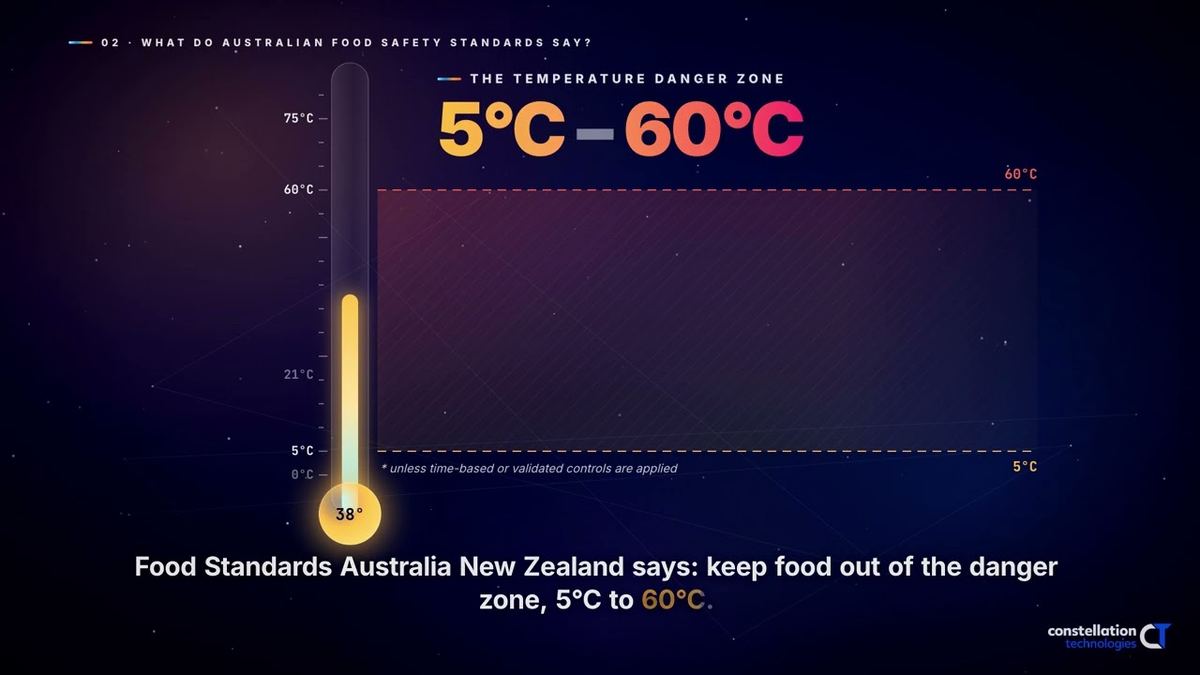
Under Australia’s Food Standards Code 3.2.2, potentially hazardous cooked food must generally be cooled:
These limits help minimise the growth of harmful microorganisms during cooling.
However, recording a successful cooldown is only part of the process. When that food is subsequently used in another preparation, the original cooling record should remain traceable to the new dish.
Additional controls, including safe storage, shelf life, handling time and reheating requirements, must also be considered.
How Callisto Solutions Connects the Entire Journey
Callisto Solutions, powered by Constellation Technologies, supports digital compound dish workflows that connect previously cooled food items with newly prepared dishes.
Instead of treating each food preparation activity as an isolated record, the system helps maintain continuity across the food preparation journey.
This enables kitchens to:
For example, when previously cooled chicken is used to prepare a new dish, its earlier cooling information remains linked to the subsequent preparation workflow.
This provides a clearer picture of the food’s journey rather than just the temperature of the final product.
Traceability Is More Than a Compliance Requirement
Effective traceability helps kitchens answer critical questions:
These questions become particularly important during food safety investigations, internal audits and potential product recalls.
Digital traceability can also support more responsible ingredient utilisation by providing greater visibility over previously prepared food, while ensuring that reuse remains subject to applicable food safety controls.
Bringing Food Safety Records Together
Modern food safety management requires more than individual temperature checks. It requires connected information across preparation, cooling, storage, reheating and final service.
With its digital food safety workflows, Callisto Solutions by Constellation Technologies helps commercial kitchens move towards a more connected and accountable approach to food preparation.
Because food safety doesn’t begin with the final dish. It begins with the history of every ingredient that goes into it.
Callisto Solutions | Powered by Constellation TechnologiesSmarter Food Safety. Connected Workflows. Better Traceability.